Articulated Dragon Print-in-Place 3D Model: A Dynamic Addition to Your 3D Printing Collection
The Articulated Dragon Print-in-Place 3D Model represents a significant advancement in the world of 3D printing, particularly for those who appreciate both functionality and aesthetics. This model is not just another static figure; it’s a fully flexible, interactive design that brings a sense of life and movement to your prints. Whether you're an enthusiast looking to expand your collection or a creator aiming to offer unique products, this dragon model stands out for its smooth articulation and ease of use.
What Makes the Articulated Dragon Unique?
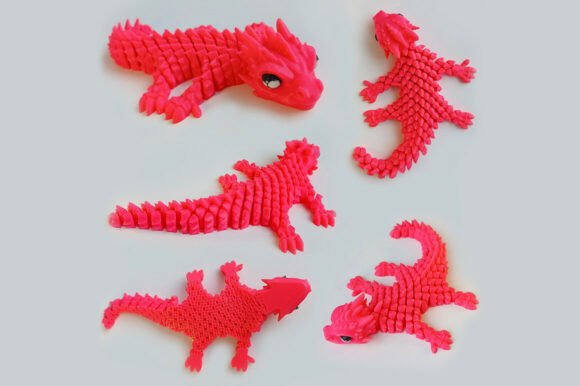
The key feature of the Articulated Dragon Print-in-Place 3D Model is its ability to move without any assembly. Unlike traditional models that require glue, screws, or additional parts, this dragon is designed with hinged segments that allow for natural motion. This makes it ideal for fidgeting, decoration, or even as a gift for fantasy enthusiasts. The flexibility of the design ensures that each segment moves smoothly, offering a tactile experience that static models cannot provide.
The model includes several components that contribute to its overall appeal. These include the dragon body, optional glint effects for the eyes, and fully articulated segments that are optimized for print-in-place construction. This means that the entire structure can be printed as a single piece, eliminating the need for supports or complex post-processing steps.
Compatibility and Recommended Print Settings
One of the most practical aspects of this model is its compatibility with a wide range of printers. It works well with Bambu Lab A1 mini, A1, P1P, P1S, X1, X1 Carbon, X1E, H2D, and other printers with a 0.4 mm nozzle. This broad compatibility makes it accessible to many users, regardless of their printer setup.
For optimal results, the recommended print settings include a layer height of 0.16 mm, using PLA material at a nozzle temperature of 220 °C and a bed temperature of 65 °C on a textured plate. An infill of 15% grid and two wall loops are suggested, with a maximum print speed of 200 mm/s. Additionally, enabling z-hop at 0.4 mm and disabling supports and rafts will help achieve the best possible outcome.
Who Benefits Most from This Model?
This model is particularly appealing to 3D printing enthusiasts, fantasy lovers, and collectors who seek dynamic, interactive, and decorative pieces. Its smooth articulation and print-in-place design make it fun to handle, display, or gift. Educators may find it useful for teaching children about 3D printing and mechanical design, while small business owners could use it as a unique product to sell in niche markets.
Professionals in creative fields, such as designers and artists, may also benefit from incorporating this model into their projects. Its flexibility allows for customization, making it suitable for various applications, from promotional items to personalized gifts.
Evaluating Quality and Usability
When evaluating the quality of the Articulated Dragon Print-in-Place 3D Model, it's important to consider both the physical characteristics and the user experience. The model's design ensures that each segment moves smoothly, which is a testament to its engineering. However, the effectiveness of the model depends heavily on the printer settings and the quality of the filament used.
Users have reported that the model performs exceptionally well when printed with high-quality PLA filament and proper calibration. Any deviation from the recommended settings may result in less than optimal performance, such as stiff joints or misaligned segments. Therefore, following the recommended print settings is crucial to achieving the intended result.
In terms of usability, the model is straightforward to print and requires minimal post-processing. This makes it an excellent choice for beginners and experienced users alike. However, those unfamiliar with 3D printing may need to invest time in understanding the basics of printer calibration and filament selection to ensure the best outcome.
Practical Considerations and Limitations
While the Articulated Dragon Print-in-Place 3D Model offers numerous advantages, there are some practical considerations and limitations to keep in mind. For instance, the model's complexity may require more advanced printer capabilities to achieve the desired level of detail and flexibility. Users with older or less precise printers might encounter challenges in producing the model accurately.
Additionally, although the model is designed to be printed in one piece, the success of the print depends on factors such as printer maintenance, environmental conditions, and the stability of the print bed. Ensuring that the printer is properly maintained and calibrated can significantly impact the final product's quality.
Another consideration is the potential for wear and tear over time. While the model is designed to be durable, repeated movement of the articulated segments may lead to slight degradation in flexibility. Proper care and storage can help extend the lifespan of the model.
Conclusion
The Articulated Dragon Print-in-Place 3D Model is a compelling addition to any 3D printing project. Its combination of flexibility, ease of use, and aesthetic appeal makes it a valuable asset for creators, educators, and collectors. While it requires attention to detail during the printing process, the end result is a dynamic, interactive piece that brings a sense of life to your creations.
Whether you're looking to add a new dimension to your 3D printing portfolio or seeking a unique gift for a fantasy enthusiast, the Articulated Dragon Print-in-Place 3D Model is worth considering. With the right preparation and attention to detail, it can deliver a rewarding and enjoyable printing experience that showcases the full potential of 3D printing technology.